Bedding · Materials & care
What to Check Before Choosing a Sleep and Beyond Organic Cotton Duvet Cover
A duvet cover is both a comfort layer and a working part of a bed: it meets the skin, protects the insert and faces repeated washing. Fabric, construction, certification, sizing and care all matter. Here is how to assess Sleep and Beyond’s organic cotton sateen set—and decide whether it fits your room and routines.
A duvet cover can look like a simple rectangle of cloth. In use, it is more consequential than that. It shapes the feel of a bed, helps shield a comforter from everyday soil and determines how much effort goes into keeping the sleep space fresh. Since it may be laundered regularly and used for years, the details beneath the first impression deserve attention.
Sleep and Beyond’s 100% Organic Cotton Sateen Duvet Cover Set is described as a 300-thread-count cotton sateen set with GOTS-certified cotton. The set includes a duvet cover and shams; the twin size includes one sham, while the larger sizes include two. It is machine washable and arrives in reusable and biodegradable packaging, according to the product information. Those facts provide a useful starting point—but a sound choice also depends on how the fabric feels to you, how its dimensions match your insert and what care you can realistically provide.
The aim is not to treat a certification, a thread-count number or the word “organic” as a verdict in itself. It is to understand what each detail can tell you, what it cannot, and which questions remain personal. A thoughtful bedding decision is rarely about finding a perfect label. It is about choosing a set that suits the bed, the sleeper and the life around it.
Start with the fabric—and what sateen means
Cotton is a familiar bedding fiber, but the way it is woven influences its surface and behavior. Sateen is a weave structure, not a separate fiber. It is commonly associated with a smooth hand and a subtle sheen. That surface can feel appealing to people who like bedding that glides rather than feels crisp or textured. The Sleep and Beyond set is described as soft 300-thread-count cotton sateen.
The number is useful as a specification, but it should not carry the whole decision. Thread-count figures describe threads within a given area of fabric, yet they do not independently establish softness, durability or overall quality. Fiber characteristics, yarn, weaving, finishing and sewing also affect how cloth feels and wears. Nor does a higher number automatically mean a better duvet cover. If possible, assess the hand-feel in person; otherwise, compare the fabric description with your known preferences and look for clear return and care information before committing.
Sateen’s smoothness is not universally ideal. Someone who prefers a cool, crisp feel may gravitate toward a different weave, while another sleeper may value the softer surface. Climate, room temperature, the duvet insert and individual comfort all contribute to the experience. A cover alone cannot guarantee a cooler or warmer night: it is one part of a bedding system that includes the insert, sheets and sleeping environment.
Read the certification as a standard, not a slogan
The product description identifies the cotton as GOTS-certified. GOTS—the Global Organic Textile Standard—is a textile processing standard with requirements covering organic fibers and aspects of processing across the supply chain. Certification can give consumers a more structured basis for evaluating claims than an unqualified “natural” or “eco-friendly” label. It does not, however, answer every question about a product’s environmental impact, working conditions, durability or suitability for an individual household.
For this set, the listed information says the cotton is GOTS-certified and describes it as grown without pesticides or carcinogenic chemicals. Consumers who want to verify the scope of a certification can check current documentation and the precise certificate details rather than relying on a logo or short product summary alone. Standards can change, and certification applies within defined rules; understanding what those rules cover helps keep expectations realistic.
Certification is best used as one piece of evidence among several. Material origin, production information, construction, care instructions, packaging and expected useful life all help build a fuller picture. It is also reasonable to distinguish between what a product listing states and what a shopper has independently verified. Clear, neutral language makes that distinction easier—and helps avoid turning a label into a blanket promise about every stage of a product’s life.
Check the size against the insert you already own
Sizing is a practical detail with outsized consequences. A cover that is too small can compress a duvet insert; one that is notably too large may leave excess fabric or allow the fill to shift. Before choosing a set, measure the insert itself rather than relying only on the bed’s mattress size. Duvet dimensions and mattress dimensions are not interchangeable, and sizes can vary between manufacturers.
The listed dimensions for the Sleep and Beyond set are:
- Twin: duvet cover, 68 × 88 inches; includes one queen sham, 20 × 30 inches.
- Full/Queen: duvet cover, 92 × 92 inches; includes two queen shams, 20 × 30 inches each.
- King: duvet cover, 104 × 92 inches; includes two king shams, 20 × 36 inches each.
- Super King: duvet cover, 112 × 100 inches; includes two king shams, 20 × 36 inches each.
The twin configuration is worth noticing: the product information specifies a queen-size sham rather than a twin-specific sham. That may suit your pillow arrangement, but it is a detail to confirm before ordering. The Full/Queen option groups two mattress labels under one cover size, so compare its stated measurements directly with your duvet insert. For any size, check whether your insert’s dimensions are close enough to create the look and fullness you want.
Also consider how you make the bed. A cover that fits your insert can still hang differently depending on mattress depth, bed frame height and whether you use a top sheet. Those details are not reasons to reject a particular size; they are reasons to use measurements rather than assumptions.
Know what comes in the set
The set is described as a duvet cover with shams. According to the product dimensions, twin includes one queen sham, and Full/Queen, King and Super King each include two shams in the corresponding stated pillow size. If you are replacing only a cover, consider whether the included shams are useful. If you are furnishing a room from scratch, they may help create a coordinated appearance, but they do not replace fitted or flat sheets.
The product information also lists three color options: Crisp White, Classic Ivory and Steel Grey. Color is partly a design choice and partly a maintenance consideration. White and light shades may make marks more visible; darker or grey tones may suit a different palette. Neither is inherently easier to care for in every home. Household routines, detergent, water conditions and the way bedding is sorted can all affect appearance over time. Confirm current color availability with the seller, since listings can be updated.
Machine washable does not mean care-free
The duvet cover is described as machine washable—a meaningful convenience for an item that will come into regular contact with skin and an insert. But “machine washable” is a broad signal, not a complete care plan. Before laundering, read the instructions supplied with the set and follow the care label. Water temperature, detergent, cycle choice and drying method can affect cotton fabric, color and seam life.
A measured routine can help preserve bedding. Wash the cover when needed rather than treating an aggressive schedule as a mark of virtue. Avoid overcrowding the washer, which can restrict rinsing and increase friction. Use an appropriate detergent, and follow the label’s guidance on bleach and temperature. If tumble drying is permitted, avoid excessive heat; removing bedding promptly can also reduce deep creasing. These are general textile-care considerations, not a substitute for the manufacturer’s instructions.
A duvet cover also protects the insert, potentially reducing how often the heavier comforter itself needs cleaning. That benefit depends on the household and the care requirements of the insert. Check both labels before creating a routine: an easy-care cover does not mean every duvet inside it can go into a household washer. For the cover, the listing’s machine-washable claim is helpful, but the care label remains the authority for specific settings.
Look beyond the fabric to construction and useful life
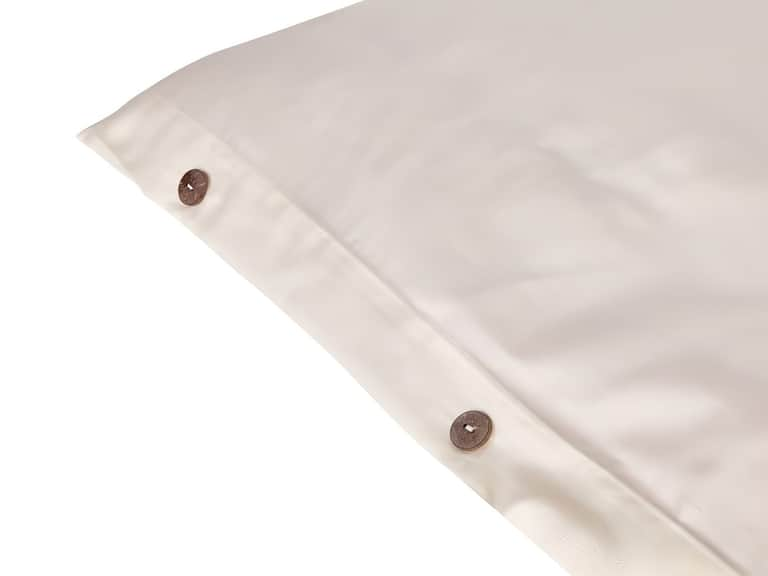
A duvet cover takes repeated movement, laundering and the daily strain of making a bed. Seams, closures and finishing therefore matter alongside the fabric itself. The available product description identifies the material and weave, but does not specify every construction detail, such as the type of closure or reinforcement at stress points. If those features are important to you, ask the seller to confirm them rather than assuming they are present.
Durability is difficult to infer from a single figure. A 300-thread-count label cannot promise how many years a cover will last. Use habits matter: frequent washing, high dryer heat, rough handling and overloading can shorten the life of many textiles. So can fit problems that put unnecessary strain on seams. Choosing the right size and caring for the fabric according to its instructions are practical ways to support a longer service life.
The product listing describes the cover as durable, but any such description should be understood as a product claim, not a guarantee of a particular lifespan. A useful consumer question is not simply “How long will it last?” but “What information supports that expectation, and what care will it require?” Where the listing leaves room for doubt, seek details on warranty coverage, repairs or returns before purchase.
Consider packaging as one small part of the picture
Sleep and Beyond’s product information says the duvet cover set comes in reusable and biodegradable packaging. That may be preferable to packaging designed only for disposal, though the environmental value depends on materials, local waste systems and whether reusable packaging is actually reused. “Biodegradable” is not a guarantee that packaging will break down in every environment or in a household compost bin. Check any disposal instructions provided and use local guidance.
Packaging is visible and easy to discuss, but the product’s longer-term value is also tied to how often it is used and how long it remains useful. A textile kept in service, cared for appropriately and not replaced prematurely may serve a household better than a nominally greener alternative that does not meet its needs. The most responsible purchase is often the one chosen carefully and used for a long time.
A simple pre-purchase checklist
Before selecting the Sleep and Beyond organic cotton sateen duvet cover set, work through a short checklist. It turns broad claims into practical questions that can be answered against your own bedding setup.
- Measure your insert. Compare its length and width with the listed cover dimensions, not just the label on your mattress.
- Choose a weave you enjoy. Sateen has a smooth surface; decide whether that feel suits your preferences and sleeping environment.
- Understand the certification claim. The set is described as GOTS-certified cotton. Verify documentation if you need confirmation of current certification scope.
- Count the shams. Twin includes one queen sham; the other listed sizes include two shams in the specified dimensions.
- Check the care label. The set is listed as machine washable, but confirm the recommended wash and drying instructions.
- Ask about unlisted construction details. If closure type, stitching or warranty matters to you, request specific information.
- Think about the color and routine. Choose among Crisp White, Classic Ivory and Steel Grey with your room palette and laundry habits in mind.
- Evaluate the whole bed. Consider how the cover works with your sheets, pillowcases and duvet insert, rather than judging it in isolation.
This approach is useful well beyond one brand. It separates the information a product description can provide from the decisions that only a household can make. The right cover is not necessarily the one with the most persuasive adjectives. It is the one whose measurements, material, feel and care fit the people who will use it.
A considered choice, not a perfect one
The Sleep and Beyond 100% Organic Cotton Sateen Duvet Cover Set brings together a clearly stated fiber, a familiar weave and practical details: GOTS-certified cotton, 300-thread-count sateen, machine-washable construction, several size options and included shams. The listing also describes reusable and biodegradable packaging and identifies manufacture in a factory in the Kyrgyz Republic.
Those points make the set worth evaluating for anyone looking for an organic cotton duvet cover, but they do not settle every question. The feel of sateen is personal. Insert sizing must be checked. Care depends on the label. Certification is informative within its defined scope, not a universal measure of impact. And product information can change, so confirm the details at the point of purchase.
Good bedding decisions are often quiet ones: a fabric that feels right, a cover that fits, a care routine that is manageable and a product used long enough to justify its place in the home. Check the particulars before choosing, and let those particulars—not the appeal of a single claim—guide the final decision.
Frequently asked questions
What does cotton sateen feel like?
Sateen is a weave that is generally associated with a smooth hand and subtle sheen. Individual impressions vary, and the feel is shaped by more than thread count alone. People who prefer crisp or textured bedding may want to compare weave types before choosing.
Is the Sleep and Beyond duvet cover machine washable?
The product information describes it as machine washable. Follow the care label supplied with the set for specific temperature, cycle and drying guidance.
How many shams are included?
The twin set includes one queen sham. The Full/Queen, King and Super King sets include two shams, with dimensions listed for each size.
What should I verify before ordering?
Compare the stated cover dimensions with your duvet insert, confirm the sham configuration and color availability, and review the current care and certification information. If you need details not included in the listing—such as closure type—ask the seller directly.